Vetted. Trusted. On the journey with you.
The products, and the people behind them.
Every vendor pitches you a demo. Most of it is noise. I spent ten years working with C-levels in global fintech, separating the tools that move revenue from the ones that just look busy, and I vet the people behind every product as hard as the product itself: the founders, the history, how they show up when something breaks at 3am. Only what survives takes one of ten seats. Pick wrong and you burn budget, months, and credibility with your board. Pick from my Top 10 and you don't.
My network took ten years of showing up and delivering to build: founders, CEOs and the people who sign. One bad recommendation would burn it overnight. That's why my shelf holds ten seats, not fifty. The list is short because my name is on every line of it.
I sat through the demos. I pulled apart the pricing line by line. I tested every claim against operators who'd know, and I vetted the people as hard as the products: who built it, how long they've carried it, how they show up when it breaks. Almost everything got rejected. What survived is the Top 10, and when I bring one of them to your table, my reputation arrives with it.
That's the entire business model.
Every filled seat earns its place the same way: it grows revenue, protects revenue, or frees the capacity to chase it. I compounded ~15% growth for nine straight years, so I know exactly what moves a P&L and what just looks busy. Nobody buys a seat on this list. Products earn it, and the people behind them earn it too, because I've known most of them for a decade. That's what a recommendation from this list is worth.
Right now your dashboards are lying to you by omission. Ten reports, no verdict. Oracle's study of 14,000 executives found 86% say the sheer volume of data makes decisions harder; separately, 77% of senior leaders admit they only sometimes or rarely question the data they rely on. That's the flaw in every BI stack money can buy: dashboards describe, they don't decide, and Gartner and BARC surveys have adoption stuck at a quarter of employees for two decades while the conclusion still gets outsourced to a meeting. The Business Brain learns how your company actually runs, then finds the single constraint choking your growth and hands you the move that removes it - built by a founder who scaled a trading platform from zero to 400,000 monthly active users in 24 months, with this exact system running underneath. One engagement. Brutal clarity. Ignore it and you keep optimizing the wrong lever, quarter after quarter, while the real constraint compounds against you.
MIT's own research found 95% of generative-AI deployments produce no measurable profit impact. Adoption was never the gap, redesign is: McKinsey ties profit to one thing, redesigning how the work actually flows, and only 21% of firms have done it. In two years, half your competitors will run on a cost base and a decision speed you can't touch, because they rebuilt with AI at the core instead of bolting it on. Led by an operator who has founded and advised more than 40 businesses across 20 industries and rebuilt his own companies AI-first before advising anyone else to, this rewires how your firm actually operates: sales, marketing, support, reporting, decisions. Sit this one out and you're not choosing to wait, you're choosing to compete against the version of your industry that didn't.

Not chatbots, and not software you buy and forget. This is your first AI hire. Specialist AI agents that join your team like employees: a CEO Advisor that learns your business and pressure-tests every decision before you commit, an SEO Advisor that outthinks agencies charging ten times more, and custom-built agents for any seat you need filled. On Cooper Fitch's UAE Salary Guide, a C-level in Dubai runs AED 75,000 to 120,000 a month, roughly $20,000 to $33,000. These run $1,000 to $1,500. And generic seats won't get you there: Gartner found only 16% of Copilot pilots ever reach production, and Upwork's research has 77% of staff saying AI tools added to their workload. These absorb the work instead of handing back drafts. They onboard in days, work while you sleep, never drop a thread, and get sharper every day you use them - the same agents already running the founder's own companies. Keep waiting on headcount approval and your competitors already hired theirs. Make the hire and you'll understand why headcount was never the real constraint.

Patch your infrastructure together vendor by vendor and nobody owns how it fits. Exposure gaps and platform performance issues sit unnoticed until they're expensive: Finance Magnates' analysis of the November Cloudflare outage put the cost to an average broker at roughly 1% of monthly trading revenue, and ITIC's survey has an hour of downtime past $300,000 for most mid-size firms, gone in hours, before anyone counts the client trust that doesn't come back. This is institutional-grade risk and infrastructure consulting for brokerages running outside the funded-trader model: exposure controls, order-flow analysis, independent platform audits and health checks, liquidity and vendor guidance that isn't quietly selling you something else. Multiple broker deployments, four platform integrations, go-live in under 48 hours, 24/7 monitoring with a 15-minute incident SLA. Vendor-agnostic by design - the recommendations are aligned with your book, not a referral fee. Keep managing infrastructure and risk as separate vendor relationships and the gaps between them are exactly where the damage happens.
Most plugin vendors have never sat a dealing desk. Yours has. Server-level infrastructure for MT4, MT5, cTrader and DXtrade, built by dealing-desk veterans who solved the exact problems they used to live with: virtual dealer execution controls, margin and exposure enforcement, swap and bonus management, prop tooling, synthetic indices, NOP limits. Platform-native, not a wrapper, so no added latency and no reconciliation drift. TABB Group research puts it plainly: five milliseconds of added latency costs a platform at least 1% of its flow; ten can cost 10% of revenue. Server-level means zero added. And when the shelf doesn't cover it, they build beyond it: bespoke plugins scoped and fixed-priced before a line is written. Stay on a generic stack and every edge case becomes a support ticket you wait days for, while your competitors' desks run on rails built by people who lived this.
Every funded-trader program leaks in the same place: the gap between your rules and what traders actually do. Dashboards show positions, not schemes: they can't connect the accounts, devices and timing behind group passing, cross-account hedging and latency arbitrage. And a performance fee isn't simulated money, it's cash paid straight from your operating revenue, which is why serious firms audit every payout before releasing funds. This engine does it automatically, catching what your dashboard misses before it becomes a payout, with complete challenge and funded-stage rule enforcement and exposure control. Industry tracking by VeritasChain counted roughly 1 in 7 prop firms worldwide, 80 to 100 operators, shutting their doors between early 2024 and late 2025. Weak risk tooling is how it happens. Every payout it stops is pure margin recovered. But here's the real move: the platform itself can be acquired outright. Stop leasing the edge and own it permanently - no per-seat pricing, no vendor dependency, no one else's roadmap deciding your risk stack. This is the one I put my name on. Ask me about acquiring it. Or keep finding the abuse after the money's gone, and watch your challenge economics bleed out one payout at a time.
Friday night, your biggest client taps pay three times. Declined. Declined. Declined. He's funding your competitor before your Monday standup hears about it. The payment screen is where marketing money goes to die, yet payments is the biggest retention tool you own: clients forgive a bad trade, never a stuck withdrawal. Most forex PSPs manage declines after the fact, routing tricks and fraud tools. This stack removes them at the structural level: open banking for Europe moves money straight from the client's own bank account: no card network in the middle, no chargeback exposure once it clears, at fees 40-85% lower than a card swipe. On local rails in India it lifted payment success from 25% to 65%. Card rails can't fix this from the inside: Checkout.com and Oxford Economics found issuers reject legitimate payments worth 1-2% of revenue as false declines, and one acquirer termination puts a broker on Mastercard's MATCH list for five years, visible to every acquirer that follows. Around that core: fiat and crypto pay-ins across Africa, Australia and the EU, dedicated EU and UK accounts on SEPA Instant and SWIFT for brokers who've been de-banked, compliant mass payouts and same-day OTC settlement, run by a group that's handled high-volume offshore flow since 2016. Any broker, any risk profile. My last executive seat was inside stablecoin payments; I know where these rails bend and where they break. Keep stitching PSPs together and every failed deposit is a funded client you paid for and never met.
Watch your book when NFP hits or volatility arrives out of nowhere, and you'll meet your real liquidity provider: the one who widens to a canyon, rejects your fills, and lets your best clients bleed slippage while your dealing desk just watches. One LP, opaque pricing and a bridge nobody owns isn't a setup, it's a countdown. This desk delivers institutional multi-asset liquidity: FX, metals, indices and commodities, priced from Tier 1 bank and non-bank providers, with executable feeds straight into the hubs your platform already trades through, full STP, around the clock. When real volatility hits, single-feed setups don't bend, they vanish: XTX Markets' own study caught one major LP's rejection rate going from 3% to 60% in a single month during the 2020 spike. This desk's own retail book feeds it live order flow, so pricing holds through exactly the moments other providers panic. Regulated across three major jurisdictions, built on real balance sheet, and named Best Prime of Prime at Finance Magnates London this year. This isn't a vendor I met at an expo: they've been my client for a decade, and I know exactly what they're about. Keep leaning on a single LP's mood and the next spike prices your book for you.

You know the pause. The bank, the PSP, the fund you courted for months, all warm, right up to "and where are you licensed?" Then the email goes quiet. And when a new region opens up, the application takes so long the opportunity is gone before the approval arrives. The build route is a lottery you pay for either way: on the FCA's own numbers, 45% of first-time applications now fail, up from 27% two years earlier, and the lawyers bill by the hour whether you pass or not. This practice opens twelve jurisdictions: the UK, Australia, Cyprus, South Africa, Singapore, the UAE, Vanuatu, St Lucia, Mauritius, the Cayman Islands, the Seychelles and the Comoros, through two doors: build the license end to end, or acquire a company that already holds one and start trading now, the move for when a new market won't wait eighteen months. Acquisition turns an approval lottery into due diligence, done in weeks. Run by people who've sat across the table from these regulators, not just read the guidelines. Keep operating out of the grey zone and one regulator letter unwinds everything you've built.
Right now, the conversation that closes your next deposit is probably happening on someone's personal WhatsApp: untracked, unauditable, and gone the day that rep resigns. The FCA's own review of off-channel communications found breaches at every level of a firm, 41% involved someone at director grade or above, and off-channel messaging has already cost financial firms more than $2 billion in SEC fines since 2021. That's not a junior problem a policy memo fixes. The platform I back puts every client conversation on your numbers: one compliant inbox across WhatsApp, Telegram & Instagram, automated re-engagement for the deposits that slipped, campaigns hitting 72% higher open rates than email. Official Meta tech partner, already running at names you'd recognize instantly. Keep running revenue through traditional engagement and you're one step away from losing the relationship entirely.
Every seat on this list has already survived my vetting. The only question left is which one goes to work for your business.
30-Minute DiagnosticThe Business Brain, AI Transformation and Executive AI Agents don't care what you sell. They care that you have revenue, ambition, and a constraint you haven't found yet. If your board meetings run on opinion instead of clarity, that's the problem I solve.
You don't need a board mandate to move. Executive AI Agents are hired one seat at a time: a CEO with an advisor that pressure-tests every call, a marketing lead with an SEO brain that outthinks the agency. If you carry the number personally, this one is yours.
This is home. I know your P&L, your sales floor, your churn curve and your risk book, because I spent ten years building growth for the companies that supply you. Engagement, risk, infrastructure, plugins: most of this list was built for exactly this floor.
You tell me where it actually hurts: growth, conversion, operations, clarity. I tell you straight, on the same call, whether I have your answer. If I don't, I say so on the spot, and you've still spent thirty minutes with someone who knows your market cold. No follow-up email trying to keep the deal alive.
A short, sharp audit of how you handle the problem today, not a sales deck dressed up as discovery. You keep the findings whether we go further or not. I'd rather lose the deal than recommend into the dark, because a bad recommendation costs me more than it costs you.
Senior people, not sales reps. Terms that make sense because I've negotiated both sides of this exact table. And I don't disappear after signature: I'm in the demo with you, an insider's eye across the legal process, deep in the onboarding until it runs, and still on the journey with you years later.
Thirty minutes. No deck, no pitch. If I can't help, I'll tell you inside the first ten.
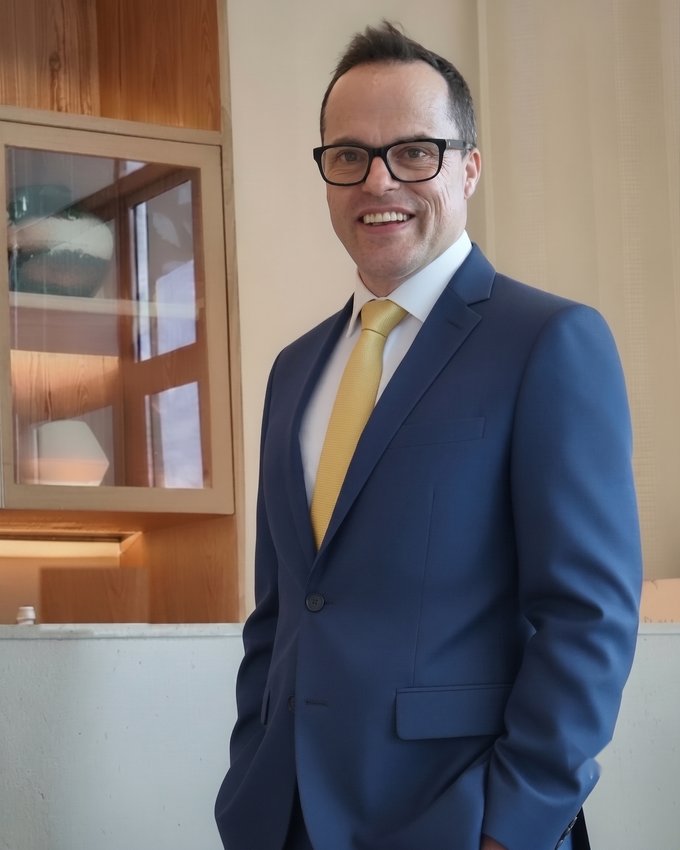
30-Minute DiagnosticI'm Bazil De Bruyn. Baz, to an industry that's shaken my hand for a decade. For nearly ten years I was the commercial engine at Autochartist: roughly 15% revenue growth, every single year, nine years straight, trusted directly by ownership with no layers in between. That growth played a direct role in the company's acquisition by oneZero Financial Systems, a billion-dollar fintech and the largest technology provider in the space, where I served as Director of Business Development.
Since then: SVP of Partner Solutions in stablecoin payments, and a career spent evaluating platforms, pricing and vendor claims for a living. I've sat close enough to legal, finance, marketing, product and growth, not as a spectator but as the one making the pieces fit, to know when a pitch will survive contact and a product will thrive with your actual business, and when it's just a good deck.
Every deal across that decade was won the same way: diagnose first, recommend second, stay in the room after signature. Elevate Edge is that judgment, working for you.
Enterprise value sales in B2B fintech is challenging: long cycles, technical buyers, multi-year contracts and senior stakeholders across the globe. Bazil thrives in exactly that environment. He took the time to genuinely understand what a prospective client was trying to solve, and then built a compelling case around their specific context. He had a regular cadence of closing large deals.
His consistency was key in helping maintain a 15% annual growth rate in a mature, highly competitive market. Highly capable of mapping out multi-phase enterprise deals and engaging professionally with senior decision-makers, always backed by thorough preparation.
The most tenacious sales person you'll ever meet. Never takes no for an answer. Process driven, meticulous.
Working with Bazil across both Autochartist and oneZero Financial Systems was one of the more genuinely positive professional relationships I have experienced in this industry. I was conducting a rigorous, research-driven evaluation of competing platforms at the time, and Bazil supported that process with exceptional responsiveness, product knowledge, and a level of personal investment that is rare in a vendor relationship. He is someone who genuinely invests in the people he works with, and that makes all the difference.
In a world where people often go quiet after the contract is signed, Bazil was the opposite. Proactive, attentive, and genuinely invested in making sure the solutions we had implemented were delivering real value. He set the bar for what great client relationship management looks like.
Having worked with Bazil for almost a decade in various roles, I found him an excellent collaborator. He is persuasive, communicative, competent and thorough, and of impeccable character. In other words, what a top executive should be. I would have no hesitation in recommending him to anyone.
If one of the ten solves it, you'll know exactly how, and I'll be beside you from first demo through onboarding and beyond. If none of them do, I'll tell you that too. This isn't a pitch, it's a door. Walk through it once and you'll know within thirty minutes whether I'm worth keeping in the room.
Vetted. Trusted. On the journey with you.